

du@xllwire.com


✕



Amid the waves of industrial Internet and the new energy revolution, there is a low-key yet crucial track - the wire harness industry. As the "nerve network" of equipment, wire harnesses undertake the core functions of power transmission and signal transmission. From new energy vehicles to industrial robots, from 5G base stations to aerospace equipment, almost all electrified and intelligent products cannot do without their support. In 2026, with the explosive growth and technological innovation in downstream application fields, this "hidden necessity" industry is embracing unprecedented development opportunities and has become a hot topic worthy of in-depth analysis on public accounts.
Why has the wiring harness industry suddenly "gone viral"? The core demand is exploding
The rise of the wire harness industry is essentially a "chain reaction" of downstream industrial upgrading. In the past, wire harnesses were mostly regarded as "accessory products", but nowadays, driven by multiple demands, their market size and technical value are being redefined:
New energy vehicles: The biggest growth engine, demand is rising exponentially
New energy vehicles represent a "super blue ocean" in the wiring harness industry. The value of a single wiring harness for a traditional fuel vehicle is approximately 1,500 to 2,000 yuan. However, for new energy vehicles, due to the addition of components such as battery systems, motor controllers, and autonomous driving sensors, the value of a single wiring harness has directly doubled to 3,000 to 8,000 yuan, and for high-end intelligent models, it has even exceeded 10,000 yuan. By 2026, the global penetration rate of new energy vehicles is expected to exceed 35%, and this field alone will drive the market size of wiring harnesses to grow by more than 20 billion yuan. Among them, high-voltage wiring harnesses (compatible with 400V/800V voltage platforms) and high-speed signal wiring harnesses (supporting data transmission for liDAR and millimeter-wave radar) have become the most core growth points.
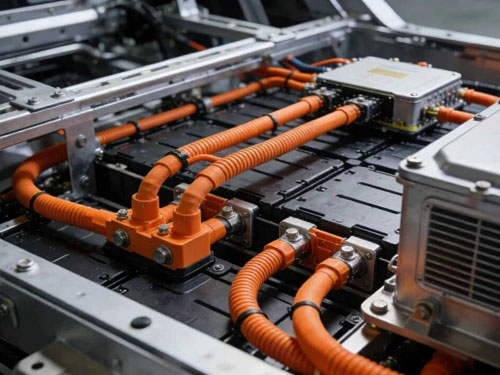
Industry 4.0: Intelligent manufacturing gives rise to the demand for "customized wiring harnesses"
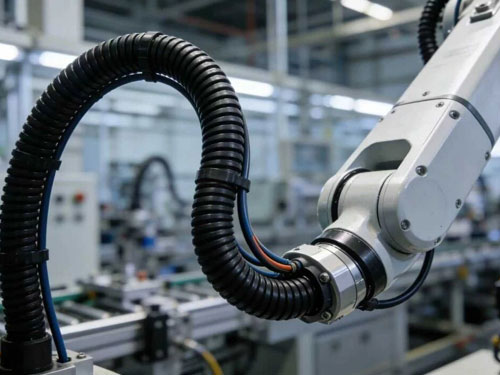
The popularization of industrial robots, intelligent warehousing and automated production lines has bid farewell to the "standardization era" for industrial wiring harnesses. In industrial scenarios, wiring harnesses need to adapt to harsh environments such as high temperatures, high humidity, and strong vibrations, while also meeting the data transmission requirements for high-speed collaboration among devices. For instance, flexible wiring harnesses are needed at the joints of industrial robots, and high-density wiring harnesses are required for sensor networks in smart factories. The added value of these customized products is much higher than that of traditional wiring harnesses, making them the core competition tracks for enterprises.
Communications and Data Centers: The demand for 5G and computing power drives technological upgrades
The large-scale construction of 5G base stations and the "computing power race" in data centers have put forward higher requirements for communication wiring harnesses. 5G base stations require low-loss and anti-interference RF harnesses, while data centers need high-density and low-latency optical fiber harnesses and power harnesses to support the storage and transmission of massive amounts of data. By 2026, the number of global 5G base stations is expected to exceed 5 million, and the number of data center racks will increase by 30%, directly driving the continuous rise in demand for communication wiring harnesses.
Aerospace and medical: The high-end market breaks through the growth ceiling
Wiring harnesses in the aerospace field need to meet strict requirements such as lightweight, high reliability, and radiation resistance. Wiring harnesses for medical equipment (such as nuclear magnetic resonance and ventilators), on the other hand, must have biocompatibility and high-precision signal transmission capabilities. Although these high-end niche markets are not large in scale, they have high technical barriers and profit margins, and have become an important direction for leading enterprises to break through the "low-end internal competition".
The three major technological trends in the wire harness industry in 2026 will determine the survival of enterprises
The upgrading of demand is driving technological innovation. In 2026, the wire harness industry will present three core technological trends. Enterprises that fail to keep up with the pace may be rapidly eliminated:
Lightweighting: "Reducing weight" has become the core demand
Whether it is new energy vehicles (range anxiety), aerospace (load limit), or consumer electronics (portability demand), all are forcing the "lightweighting" of wiring harnesses. Enterprises replace traditional pure copper wires by adopting lightweight materials such as aluminum alloys and copper alloys. At the same time, optimize the wiring harness structure, reduce redundant wires and connectors, and achieve "weight reduction without efficiency reduction". For instance, a certain new energy vehicle enterprise has upgraded its high-voltage wiring harness materials, reducing the weight of a single vehicle's wiring harness by 15% and directly increasing the driving range by 5 to 8 kilometers.
Intelligence: From "Passive Transmission" to "Active Perception"
Intelligent wiring harnesses are becoming a new trend in the industry. By integrating sensors, chips and other components into your wiring harness, real-time monitoring of voltage, temperature and current can be achieved. Once abnormal situations such as short circuits and overloads occur, they can be immediately fed back to the control system, reducing the risk of equipment failure. For instance, after integrating temperature sensors into the battery wiring harnesses of new energy vehicles, it can effectively prevent batteries from overheating and catching fire. The intelligent monitoring function of industrial wiring harnesses can reduce the downtime of production lines.
High voltage and high speed: Adapting to the demands of high-end scenarios
With the upgrade of new energy vehicles to 800V high-voltage platforms and the transformation of industrial equipment to 5G + industrial Ethernet interconnection, the "high-voltage" and "high-speed" development of wiring harnesses has become an inevitable trend. High-voltage wiring harnesses need to address technical challenges such as insulation, heat dissipation, and electromagnetic compatibility, while high-speed signal wiring harnesses must meet a transmission rate of over 100Gbps. This places higher demands on the material research and development and production processes of enterprises, and also drives the industry towards a "high technical threshold" transformation.
Market landscape: Domestic substitution is accelerating, and regional competition is becoming extremely fierce
The current global wiring harness market presents a pattern of "high-end monopoly and full competition in the mid-to-low-end market", but this pattern will be broken in 2026, with domestic substitution becoming the core main line.
Regional distribution: Asia remains the core growth pole
The Asian market accounts for over 60% of the global wiring harness market. China, Japan and South Korea are the major producers and consumers. Among them, China, as the world's largest manufacturing base, is not only a major producer of wire harnesses but also a major consumer. By 2026, the market size of wire harnesses in China is expected to exceed 150 billion yuan, and its share of the global market will further increase.
Domestic substitution: Breaking through from "mid-to-low-end" to "high-end"
In the past, the high-end wire harness market was monopolized by international giants such as Tyco, Sumitomo Electric, and Yazaki. However, in recent years, domestic enterprises have gradually achieved import substitution through technological research and development and capacity expansion. In fields such as new energy vehicles and industrial automation, domestic enterprises have taken the leading position in the mid-to-low-end market by virtue of their cost advantages and rapid response capabilities. In the high-end market, some leading enterprises are breaking the monopoly of international giants by cooperating with downstream leaders (such as providing high-voltage wiring harnesses for new energy vehicle manufacturers).
Competition Focus: From "Price War" to "Value War"
As the technical threshold rises, the competition in the wire harness industry is shifting from a "price war" to a "value war". Enterprises no longer merely compete on costs but instead engage in competition centered around technological research and development, customized services, and supply chain resilience. For instance, enterprises that can respond promptly to customers' customized demands, possess core technology patents, and have stable supply chains will receive more orders from leading downstream enterprises.
Enterprise Breakthrough: Seize Three major opportunities and Avoid These pitfalls
For wire harness enterprises, 2026 is a year of both opportunities and challenges. To establish a foothold in the market, it is necessary to seize three major opportunities and avoid two major risks:
Opportunity 1: Focus on core tracks and delve deeply into niche fields
Rather than getting caught up in the "red ocean", it is better to focus on high-growth niche markets. For instance, focusing on areas such as high-voltage wiring harnesses for new energy vehicles, flexible wiring harnesses for industrial robots, and high-speed wiring harnesses for data centers, and establishing technological barriers through the "specialized, refined, distinctive and innovative" development model.
Opportunity 2: Strengthen industrial chain collaboration and enhance supply chain resilience
The upstream of the wire harness industry consists of raw materials such as copper, aluminum and insulating materials, while the downstream includes equipment manufacturers in the automotive, industrial and communication sectors. Enterprises should establish long-term cooperative relationships with upstream and downstream partners and reduce the risk of raw material price fluctuations through joint research and development, bulk purchasing and other means. At the same time, diversified production bases should be laid out to enhance the risk resistance capacity of the supply chain.
Opportunity 3: Increase investment in research and development and lay out intelligent wiring harnesses
Intelligence is the future of the wiring harness industry. Enterprises should make early plans for the research and development of intelligent wiring harnesses, increase investment in sensor and chip integration technologies, and seize the technological high ground. At the same time, pay attention to the policy orientation of environmental protection, develop environmentally friendly materials and low-power wiring harnesses, and meet the requirements of the "dual carbon" goals.
Risk 1: Risk of technological iteration
If an enterprise's investment in research and development is insufficient and it fails to keep up with the technological trends of high pressure, high speed and intelligence, it may be rapidly eliminated.
Risk 2: The risk of fluctuations in raw material prices
The prices of raw materials such as copper and aluminum account for more than 60% of the production cost of wire harnesses. Price fluctuations will directly affect the profits of enterprises. Enterprises need to hedge against price risks by signing long-term purchase contracts, optimizing product structures and other means.


