

du@xllwire.com


✕



In the cars, household appliances, computers and even aerospace equipment that we come into contact with in our daily lives, there is a complex "neural network" hidden - it does not transmit bioelectrical signals but conveys electricity and data. This network is a Wire Harness. Many people might intuitively think: "Wiring harness?" Isn't it just a bunch of wires wrapped up with tape? This idea seems reasonable, but it is far from the truth. If the production of wire harnesses were really that simple, there wouldn't be so many sophisticated automated devices and strict quality standards. In fact, the birth of a qualified wiring harness is like a precise "Long March", with every step filled with challenges and technical details. So, why does such a small wiring harness require such a complex process? What exactly is its production process like? A panoramic view of wire harness processing: Six major battles, interlinked To give everyone an overall concept, we can simplify the entire production process of the wiring harness into a battle map, which mainly includes six key "battles" : wire opening → crimping → (pre-installation) → threading through the plastic shell → assembly → electrical testing → packaging These six links are like dominoes. Any minor flaw in the previous link may lead to the complete failure of the final product. Next, we will gradually lift the veil of mystery from each "battle".
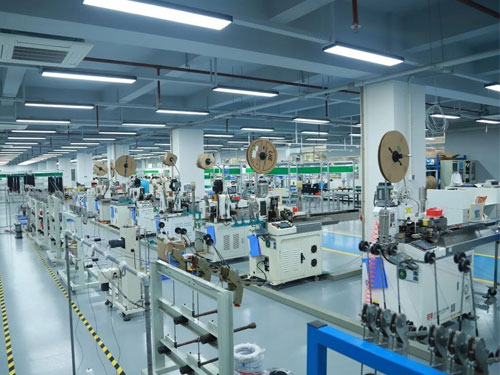
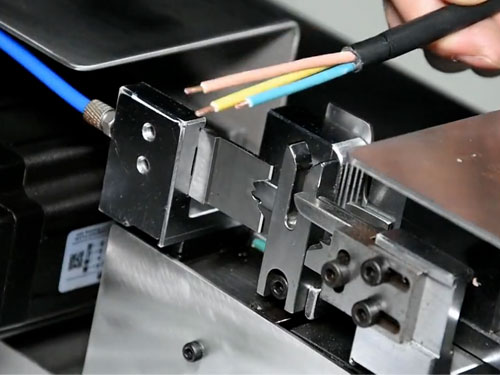
The First Battle: Wire Cutting & Stripping Precision is the beginning of all stories What is this for? "Cutting the line" is the starting point of all work, which involves two actions: cutting and Stripping. Modern factories usually use fully automatic equipment. According to the design drawings of engineers, they precisely cut the entire roll of wires into the specified length and peel off a small section of the insulating outer skin at both ends to expose the copper wires (conductors) inside. Why is it important? This seemingly simple step is actually an ultimate test of "precision". 1. Length accuracy: In a car, the wiring harness needs to be precisely wound around various mechanical structures like blood vessels. If a wire is 1 centimeter long, it may form a stress-concentrated bend during installation and is prone to wear and tear under long-term vibration. If it is 1 centimeter shorter, it may cause the joint to bear a huge tensile force and eventually break. Therefore, the length tolerance of the wiring harness is usually calculated in millimeters. 2. Peeling quality: Peeling is even more of a "technical job". If it is peeled too shallowly, the insulating skin will remain, which will lead to poor contact during subsequent crimping. If you peel too deep, the machine's blade may scratch or even cut the internal copper wire. A wire composed of 30 strands of copper wire, if 5 strands are scratched, its cross-sectional area will decrease, which means a decline in conductivity, an increase in heat generation, and a significant reduction in tensile strength, posing a serious safety hazard.
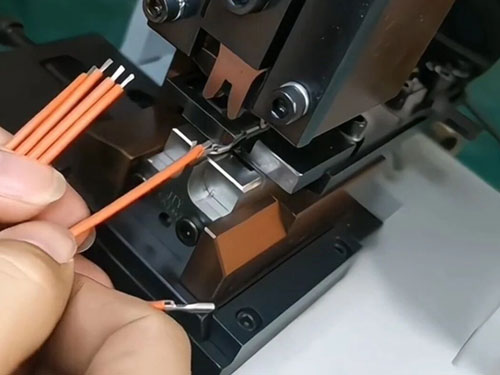
Battle Two: Crimping Endow wires with a "soulful grip" What is this for? "Crimping" is a process that uses specialized molds and equipment to firmly fix a metal Terminal onto a newly insulated wire conductor under tremendous pressure. This small metal terminal serves as a "handshake" tool for connecting wires to electrical appliances. Why is it important? Crimping is the most core and crucial quality control point in the entire wire harness manufacturing process. More than 60% of electrical faults in wiring harnesses result from poor crimping. It is not a simple "clamping", but a kind of "Cold Welding" process. Scientific principle: Qualified crimping will cause the terminal and copper wire to undergo plastic deformation under tremendous pressure, with the molecules closely bonded and the oxide layer at the interface destroyed, forming an airtight and nearly homogeneous whole. This connection not only has extremely low resistance (ensuring the efficiency of signal and power transmission), but also can withstand harsh vibrations and pulls. Quality inspection To ensure that this "soul grip" is firm enough, the factory will use a pull-off force testing machine to test its mechanical strength and conduct cross-sectional analysis with an industrial microscope, just like making a pathological section, observing the cross-sections of the terminals and copper wires, and checking whether the crimping height, width and shape are within the gold standard range (for example, whether the conductor's compactness is sufficient) Whether the insulation is properly wrapped, etc.
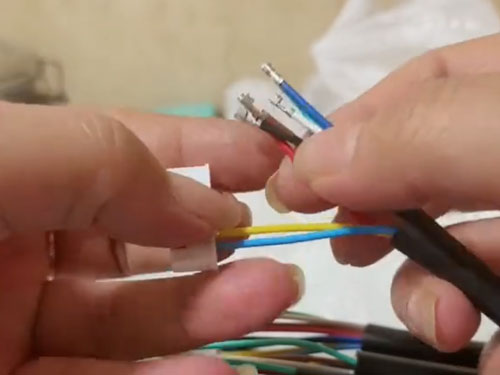
Battle Three: Housing Insertion The art of finding oneself in one's shoes What is this for? Insert the wires with the terminals pressed one by one into the designated holes of the plastic Connector Housing. For complex wiring harnesses, there may be a "Sub-assembly" process before that, that is, several wires are first combined into a small unit and inserted into a small connector, and then this small unit is merged into the main wiring harness. Why is it important? A connector may have dozens or even hundreds of holes, and each wire carries a different signal or current. Plugging in the wrong one may cause the entire device to malfunction or even burn out. For instance, if the signal line of an airbag is wrongly inserted into the hole that is supposed to receive the turn signal, the consequences would be unimaginable. Fool-proof design (Poka-Yoke) : To prevent errors, modern connectors and terminals all feature a sophisticated "fool-proof design". When the terminal is inserted, there will be a crisp "click" sound, indicating that the internal spring (Lance) has been locked in place. If it is inserted in reverse or not in place, it cannot be locked. At the same time, this is also a highly labor-intensive process that requires workers to have an extremely high level of concentration and proficiency.
Campaign Four: Assembly From "Neurons" to "Neural Networks" What is this for? This step involves gathering, arranging and wrapping all the independent or pre-assembled sub-components in accordance with the design drawings into the final wiring harness shape with auxiliary materials such as tape, corrugated pipes and cable ties. Why is it important? Assembly determines the final "size" and "armor" of the wiring harness. 1. Forming and orientation: Workers will assemble on a 1:1 Assembly Board, on which the orientation, branch position and length of each line are marked with fixtures and nails to ensure a perfect match between the final product and the installation space of the vehicle or equipment. 2. Protection and Fixation: Use PVC tape or more wear-resistant fabric-based tape for wrapping. It is not only for "binding", but also for wear resistance, noise reduction, heat insulation and insulation. In harsh environments such as the engine compartment, corrugated pipes that are more resistant to high temperatures and corrosion are also used for protection. On this basis, clips, brackets, etc. are installed to fix it on the vehicle body.
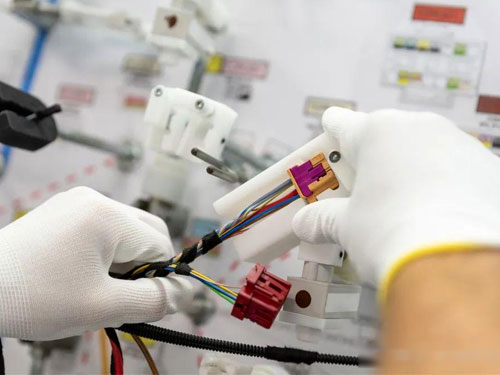
Campaign Five: Electrical Testing The ultimate "big exam" What is this for? Before the finished products are packaged, the wiring harnesses must undergo a comprehensive "physical examination" on the conduction test bench. In principle, especially in fields with high reliability requirements such as automobiles and medical care, every (100%) wire harness must undergo electrical testing. However, in some cases, such as products with extremely simple structures (like only one or two circuits), highly automated production processes, and extremely stable quality control, manufacturers may adopt Sampling tests based on agreements with customers and risk assessments. However, 100% full inspection remains the mainstream and gold standard in the industry. Why is it important? This is the last line of defense in quality control and also the most crucial one. The test bench will connect all the interfaces at both ends of the wiring harness and automatically detect the following key indicators within milliseconds by sending weak electrical signals:
1. Continuity: Is the circuit from point A to point B unobstructed?
2. Short Circuit: Are the two lines, point A and point C, which should not be connected, accidentally linked together?
3. Miswiring: Is the wire at point A inserted to the position at point D in the connector?
4. Component Test: For wire harnesses with diodes, resistors or fuses, the test bench will also check whether the functions of these components are normal. Only 100% pass all test items
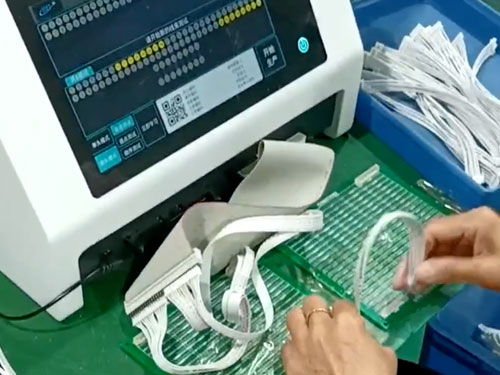
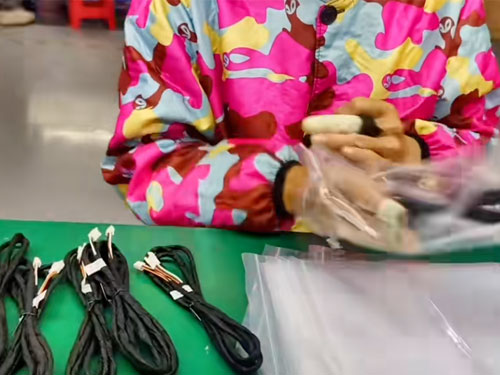
Campaign 6: Packaging The last guardian rushing to the frontline What is this for? Conduct the final Visual Inspection on the qualified wiring harnesses, affix traceable labels, and properly package them for shipment. Why is it important? Although the wiring harness is sturdy as a whole, the terminal pins and clips of its connectors are very precise. Collisions and compressions during transportation may cause it to deform or be damaged. Therefore, packaging needs to be specifically designed (such as using custom pallets or separators) to ensure that the products remain in the perfect condition they were in when they left the factory when they arrive at the customer's production line.
From an ordinary wire to a finished wire harness that carries both safety and functionality, we have witnessed the almost exacting manufacturing process behind it. Every step of this "Long March" embodies the wisdom of engineering design, materials science, precision manufacturing and quality management.


